The numbers around women in technical diving are still stark: only around 3% of technical divers are women. What the women on this list share isn't luck or a headline moment. It's years of deliberate training that let them handle extreme conditions and genuinely risky dives — cave systems, deep wrecks, ice, zero-visibility current — as a matter of course, not as a stunt. And it's the reason organizations, sponsors, and expeditions keep inviting them back.
Jill Heinerth
One of the most accomplished technical and cave divers alive, Jill Heinerth has explored underwater cave systems on multiple continents and served as the first Explorer-in-Residence for the Royal Canadian Geographical Society. Cave diving carries some of the highest technical demands and lowest margin for error of any diving discipline: zero visibility, permanent overhead environments, no direct ascent if something goes wrong. Heinerth has built a career at that edge and then written and spoken about it so other expedition divers could learn from her line of sight.
Dr. Sonia Rowley
Sonia Rowley is an evolutionary marine biologist and Assistant Researcher at the University of Hawai'i at Mānoa who has been diving since age 11. She's now a world-class technical diver working in closed-circuit rebreather (CCR) systems, with a record dive of 181 meters that lasted nine hours. Her research on gorgonian octocorals in the mesophotic "Twilight Zone" — reefs between 30 and 180+ meters, where sunlight barely reaches — has taken her deeper and longer than almost anyone documenting reef biodiversity, and earned her the Sir David Attenborough Award for Field Work from the Systematics Association & Linnaean Society of London.
Andi Cross
Andi Cross didn't start as a natural. She learned to swim at 30. The certification path after that went Open Water, Advanced, Rescue Diver, Stress and Rescue Specialty, then Divemaster and technical diving — and by the time she earned her Divemaster rating, she'd logged hundreds of dives across some of the most remote and biodiverse marine ecosystems on the planet.
The conditions since have ranged from genuinely extreme to just plain hard: technical diving at Taam Ja', the world's deepest known blue hole, a 420-meter vertical shaft in Mexico's Chetumal Bay; cave diving the cenotes of the Yucatán Peninsula; glacial ice diving in Alaska's near-freezing water; hunting WWII-era shipwrecks in Hong Kong; and zero-visibility muck diving in New York Harbor alongside the Billion Oyster Project's restoration work. She's one of roughly 3% of technical divers who are women, and every one of those dives required real training first, not just nerve.
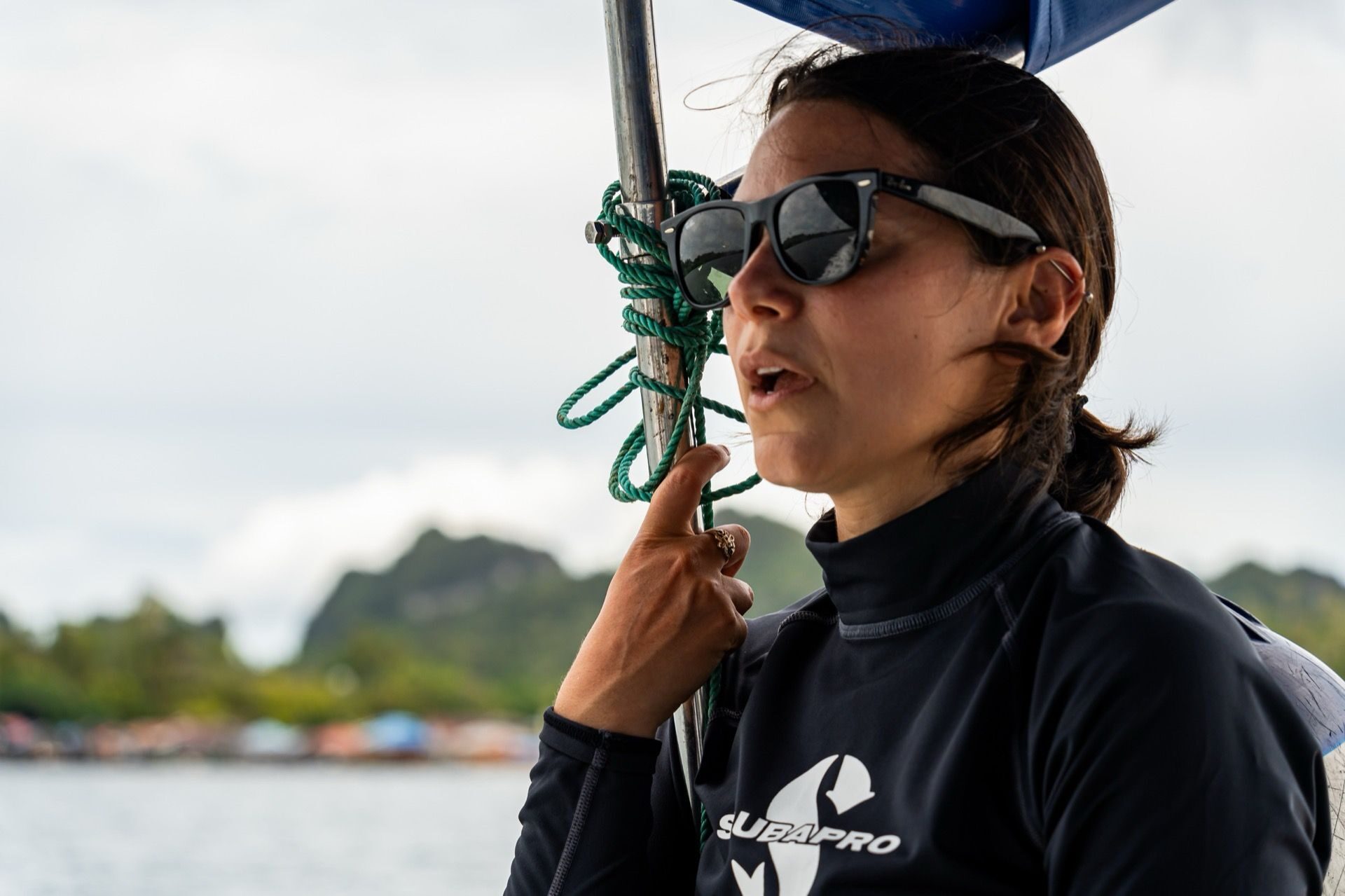
That training is also why the invitations kept coming. Cross is the first-ever strategic ambassador appointed by SSI (Scuba Schools International), a member of the Scubapro Dive Team, a Dive Rite content creator, and a DIVEVOLK ambassador — each one built around technical diving in cave systems, deep wrecks, and low-visibility environments most recreational divers never see. She's also a founding member of Protect Our Winters' Water Athlete Alliance, a Marine Conservation Institute Blue Parks Ambassador, connected to UNESCO and UN Ocean Decade Action, an Explorers Club Flag Carrier, and a WINGS WorldQuest Flag Carrier and Grantee for documentation work in New York Harbor.
All of that training became the operating model for Edges of Earth, the expedition she co-founded: three years, 50 countries, 250 dive locations, 800+ hours underwater, and roughly 1,500 interviews with the people doing conservation work on the ground — recognized as a Fast Company 2026 World Changing Idea. The training isn't the story. It's what makes the actual story possible.
Tanasia Swift
A Brooklyn native who became a certified diver at 17 in the Bahamas, Tanasia Swift now works as Assistant Director of Community Engagement at the Billion Oyster Project, leading field programs on New York Harbor's oyster reef restoration both above and below the waterline. She's currently pursuing her scientific diver certification, and her path — from a maritime high school at 14 to leading real restoration diving in one of the most challenging urban waterways in the world — is exactly the kind of on-the-ground expedition experience that doesn't always make the "top diver" lists but absolutely should.
Maja Music
Documenting underwater life and dive culture under the name Maja Music (@undercurrentreverie), she's part of a newer wave of divers using visual storytelling to bring expedition and technical diving to audiences who'll never make the dive themselves. That's its own kind of skill worth recognizing: the sport doesn't grow only through the divers pushing depth records, it grows through the ones showing everyone else what's actually down there.
For a woman looking at diving from the outside, the honest advice is the same across every one of these stories: the gear will fit eventually, the community will show up, and the only real prerequisite is deciding to start before feeling ready.